

Intro
GET UP AND GET MOVING – SAY NO TO FRAGILE BONES! Until around age 25, more new bone is added to one’s body than taken away, so bone density increases. From age 25 to age 50, bone density tends to stay stable with equal amounts of bone formation and bone breakdown. After age 50, bone breakdown (resorption) outpaces bone formation and bone loss often accelerates.
Exercise can help you build strong bones and slow bone loss. Exercise can benefit your bones no matter when you start. But you gain the most benefits if you start exercising regularly when you’re young and continue to exercise throughout your life.
Combine strength training exercises with weight-bearing and balance exercises. Strength training helps strengthen muscles and bones in your arms and upper spine. Weight-bearing exercises — such as walking, running, stair climbing, skiing and impact-producing sports — affect mainly the bones in your legs, hips and lower spine. Balance exercises such as tai chi can reduce your risk of falling especially as you get older.
What is Osteoporosis?
Osteoporosis causes bones to become weak and fragile, so that they break easily – even as a result of a minor fall, a bump, a sneeze or a sudden movement. Fractures caused by osteoporosis can be life-threatening and a major cause of pain and long-term disability.
World Osteoporosis Day is observed annually on 20 October, and launches a year-long campaign dedicated to raising global awareness of bone health and of the prevention, diagnosis and treatment of osteoporosis and metabolic bone disease.
Can Osteoporosis and Fractures be Prevented?
Yes, if action is taken early!
Fractures due to osteoporosis have a devastating impact on millions of people worldwide and result in enormous socio-economic costs to society and healthcare systems. Yet, despite effective medical advances to reduce fractures, a minority of men and women receive treatment.
Only 20% of patients with osteoporotic fractures are actually diagnosed or treated for osteoporosis, the underlying disease. In 2010, in Europe alone some 12.3 million people considered to be at a high risk for osteoporotic fractures were left untreated.
Osteoporosis can cause bones to become fragile, without any symptoms until a bone breaks. Make sure to discuss bone health and any risk factors with your doctor at your next check-up.
Find out your Risk Factors
To become aware of any potential risk factors, take the IOF Osteoporosis Risk Check.
Tips for a Bone-Healthy Lifestyle
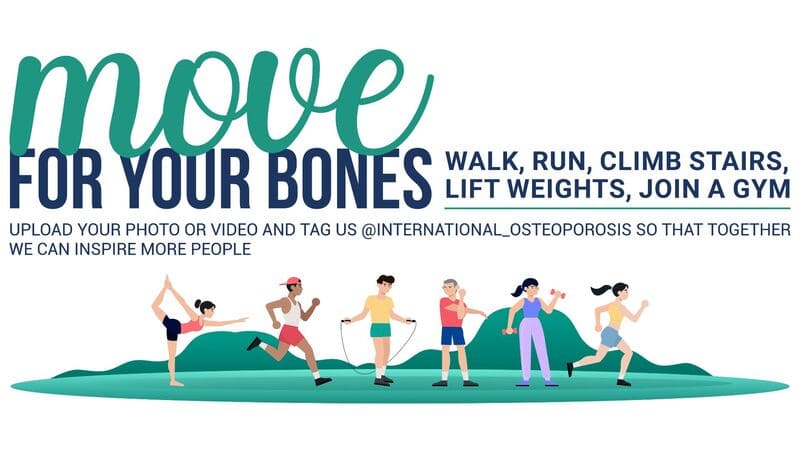
- Increase your levels of physical activity – aim to exercise for 30-40 minutes, three to four times each week with some weight-bearing and resistance exercises in the programme.
- Ensure a nutritious, balanced diet which includes enough dietary calcium see calcium recommendations.
- Dairy intolerance? Find out about calcium-rich alternatives, or explore which dairy products you can enjoy in moderation – use the IOF Calcium Calculator to estimate your approximate calcium intake.
- Spend more time outdoors to ensure you are getting enough vitamin D or take supplements if required.
- Avoid smoking and drink alcohol only in moderation.
- Re-check your osteoporosis risk factors regularly.
Resources
Osteoporosis – Mayo Clinic >
World Osteoporosis Day >
Discover more from FitFunFusion.com
Subscribe to get the latest posts sent to your email.


